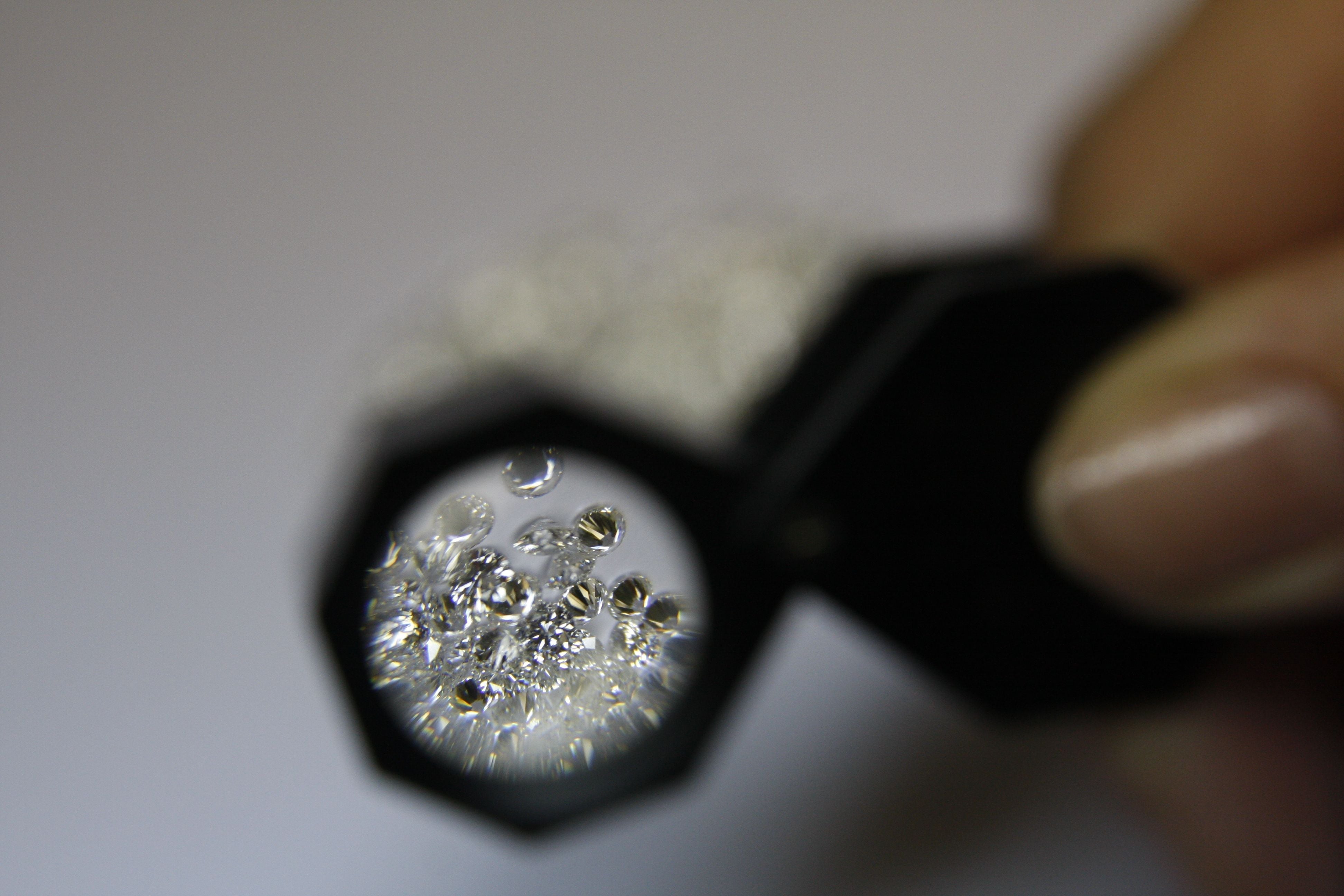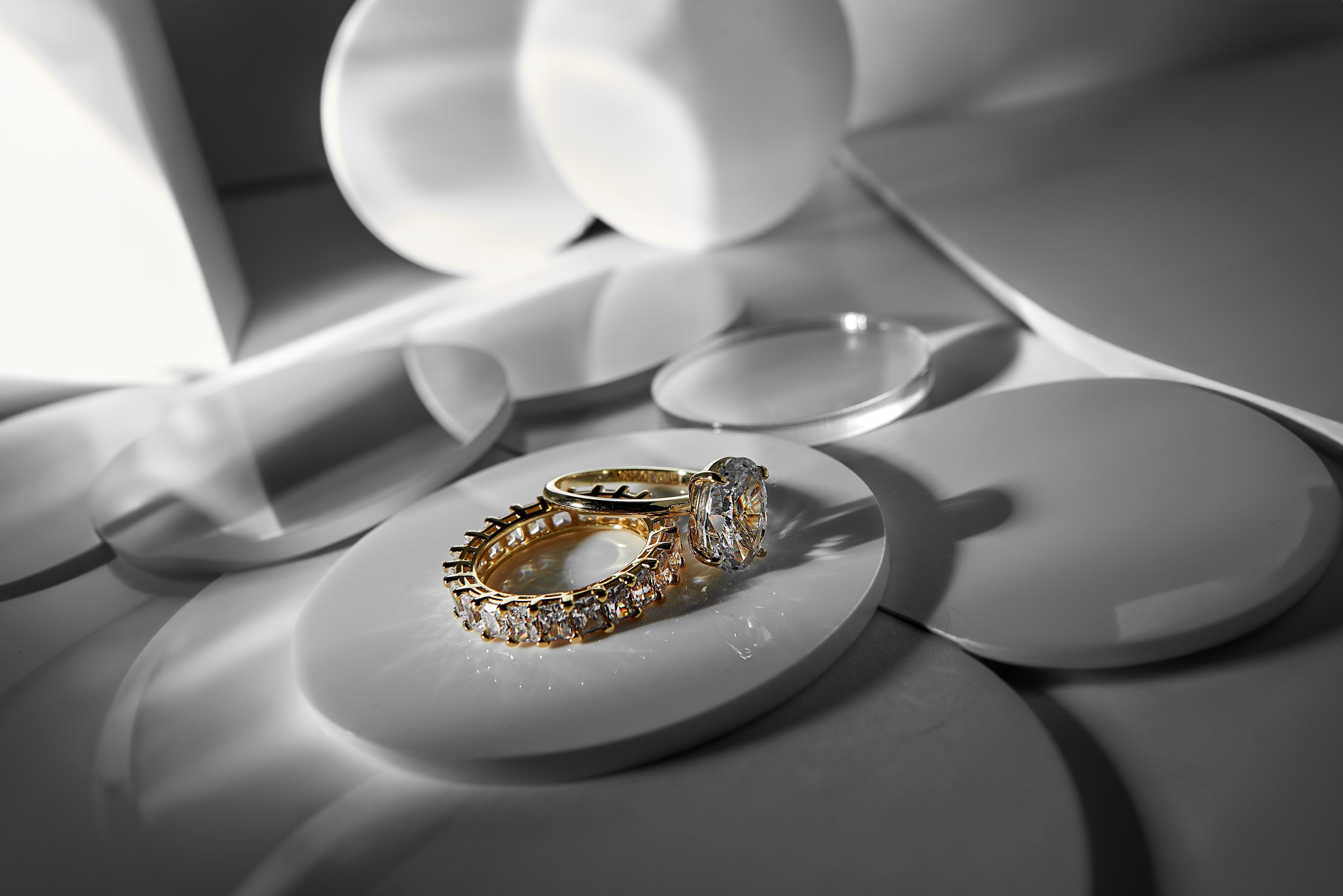
If you're shopping for an engagement ring right now, this is probably the biggest decision you'll make before you ever look at a setting style or metal color: lab grown diamond or natural diamond?
Both are real diamonds. Both are graded by the same independent laboratories using the same standards. Both will last a lifetime. But they are meaningfully different in ways that will affect your budget, your values, and what you get for your money.
This guide gives you an honest, complete comparison — no hype in either direction — so you can make the decision that's right for you.
First: Both Are Real Diamonds
Before comparing them, it's worth being clear about what they have in common, because misconceptions are widespread.
Lab grown diamonds and natural mined diamonds are the same material: pure carbon atoms arranged in a cubic crystal lattice. They have identical hardness (10 on the Mohs scale), identical refractive index (2.42), and identical brilliance and fire. The Federal Trade Commission officially recognizes lab grown diamonds as real diamonds, and grading laboratories like IGI and GIA certify both types using the same 4 Cs system: cut, color, clarity, and carat.
A lab grown diamond is not a cubic zirconia, not a moissanite, and not a diamond simulant of any kind. It is a diamond — grown in a laboratory rather than extracted from the earth.
With that established, here's where they differ.
The Differences That Actually Matter
1. Price
This is the most significant practical difference, and it's dramatic.
Lab grown diamonds typically cost 50%–70% less than a comparable mined diamond of the same cut, color, clarity, and carat weight. That gap has widened over the past few years as lab grown diamond production technology has improved and supply has increased.
In real terms, that means:
- A 1ct round brilliant, G color, VS2 clarity, excellent cut natural diamond might cost $5,000–$7,000.
- The same specifications in a lab grown diamond might cost $1,200–$2,000.
That price difference gives you two meaningful choices. You can spend the same amount and get a dramatically larger or higher-quality lab grown stone. Or you can spend significantly less and get an equivalent stone, freeing up budget for a wedding, a home, or anything else.
Many couples who start out leaning toward natural diamonds reconsider when they realize their $4,000 budget could get them a 0.75ct natural diamond or a 2.5ct lab grown diamond of equal quality. That is a real and visible difference in the ring.
2. Origin and Supply Chain
Natural diamonds form over billions of years under extreme heat and pressure deep in the earth's mantle. They are brought to the surface through volcanic activity and extracted through large-scale mining operations.
Lab grown diamonds are created in weeks or months in a controlled laboratory environment, using either the CVD (Chemical Vapor Deposition) or HPHT (High Pressure, High Temperature) process. No mining is involved.
For buyers who care about where their diamond came from, this distinction matters. Diamond mining — even responsibly conducted — involves significant land disruption, high water consumption, and meaningful carbon emissions. The Kimberley Process was established to prevent conflict diamonds (sometimes called "blood diamonds") from entering the supply chain, but experts acknowledge it has limitations and gaps.
Lab grown diamonds have a fully transparent origin: a laboratory with a documented process. There is no ambiguity about where the stone came from.
3. Rarity and Geological Age
Natural diamonds are genuinely rare. A diamond that's been worn as a ring might be a billion years old — formed before multicellular life existed on earth. For some buyers, that geological history and natural rarity carry deep meaning. The stone is ancient, irreplaceable, and one of a kind in the most literal sense.
Lab grown diamonds do not have that story. They were created recently, in a facility, and can be reproduced. If the romance of a natural origin matters to you or your partner, that's a legitimate reason to choose a mined diamond.
4. Resale Value
This is an area where honesty is important, because neither type of diamond is a strong financial investment.
Natural diamonds have historically retained resale value better than lab grown diamonds. The secondary market for mined diamonds exists and is relatively established — you can sell a mined diamond through an estate jeweler, auction house, or resale platform for some fraction of what you paid.
Lab grown diamond resale value has declined significantly as production costs have dropped and supply has grown. A lab grown diamond purchased today will likely resell for substantially less than its purchase price, and that trend may continue.
However, it's worth keeping this in perspective. Most people who sell a diamond ring of any kind receive far less than retail — typically 20%–50% of what they paid. Mined diamonds are not a liquid investment. The difference in resale performance exists, but it should not be the primary factor in your decision unless you genuinely intend to resell the stone.
Most engagement rings are worn and kept for a lifetime. Resale is rarely the actual outcome.
5. Appearance
Identical. There is no visual difference between a lab grown diamond and a natural diamond of the same grades, full stop. No jeweler can tell them apart with the naked eye. No guest at your wedding will be able to tell. No photograph will reveal the difference.
The only way to distinguish a lab grown diamond from a mined diamond is with specialized gemological equipment that detects microscopic differences in trace elements or growth patterns — differences that are completely invisible in normal use and have no effect on the beauty of the stone.
Side-by-Side Comparison
| Factor | Lab Grown Diamond | Natural Diamond |
|---|---|---|
| Chemical composition | Pure carbon — identical | Pure carbon — identical |
| Hardness | 10 (Mohs) — identical | 10 (Mohs) — identical |
| Brilliance & sparkle | Identical | Identical |
| Visible difference | None | None |
| IGI / GIA certified | Yes | Yes |
| Price vs equivalent | 50%–70% less | Full market price |
| Size for same budget | Significantly larger | Smaller |
| Origin transparency | Fully traceable (lab) | Variable (mining chain) |
| Environmental impact | No land disruption | Significant mining impact |
| Geological age | Weeks to months old | Billions of years old |
| Rarity | Reproducible | Finite and rare |
| Resale value | Lower, declining | Low, more established |
| Recognized as "real diamond" | Yes (FTC) | Yes |
Who Should Choose a Lab Grown Diamond?
A lab grown diamond is likely the right choice if:
- Budget matters to you. You want the most beautiful ring possible within your budget, and you'd rather have a larger, higher-quality stone than a smaller one simply because of origin.
- You're ethically motivated. You feel strongly about avoiding mined diamonds for environmental or supply chain reasons, and a fully transparent origin story matters to you.
- Your partner cares about size or quality. If your partner has expressed a preference for a larger diamond or higher specifications, lab grown diamonds let you reach those targets for significantly less money.
- You're practical about resale. You understand that you'll likely wear this ring for the rest of your life and aren't buying it as an investment.
- You want flexibility in your budget. The money saved on a lab grown diamond can go toward a wedding, honeymoon, home down payment, or any other goal that matters to your future together.
Who Should Choose a Natural Diamond?
A natural mined diamond may be the right choice if:
- The origin story matters deeply. You or your partner find meaning in the geological age and natural rarity of a mined diamond, and that story is part of what the ring represents.
- Your partner has strong preferences. Some people feel strongly about wanting a natural diamond. That preference is valid and worth respecting.
- You're focused on long-term resale. If there's a genuine possibility you'd want to sell or upgrade the stone in the future, a natural diamond has a more established resale market.
- Budget is not a primary concern. If you're able to spend freely and the price difference doesn't meaningfully affect your decision, there's no practical reason not to choose a natural diamond if that's what you prefer.
The Question Most Couples Actually Ask
In our experience, most couples wrestling with this decision aren't really asking "which is objectively better?" They're asking a more specific question: will anyone know it's lab grown, and will my partner feel differently about it?
On the first question: no. No one will know unless you tell them. The ring will look identical in person, in photographs, and every day she wears it.
On the second question: it depends on the person. Some partners genuinely don't care and are happy with the lab grown choice, especially when they understand the quality is identical and they can get a more beautiful ring for less money. Others have a sentimental attachment to natural diamonds that's worth respecting.
If you're unsure, the best move is to have an honest conversation with your partner before you buy. Many couples shop together for engagement rings now, and there's nothing wrong with that. A ring you both chose and both feel good about is worth more than a surprise ring that misses the mark.
What About Lab Grown Diamonds at Anjays Designs?
At Anjays Designs, we specialize in lab grown diamonds — not because they're cheaper, but because we believe they represent the best value in fine jewelry today. Every stone we use is IGI certified, set in solid 14K or 18K gold, and handmade to the same standard we'd want in our own jewelry.
Our collections include styles for every taste — from clean, classic solitaires to intricate nature-inspired designs and meaningful Celtic settings. Whatever the ring looks like, the diamond at its center is a real diamond: brilliant, durable, and beautiful.
Browse our lab grown diamond engagement rings →
If you have questions about choosing between specific stones, cut grades, or settings, contact us — we're happy to help you think it through.
Frequently Asked Questions
Is a lab grown diamond just as strong as a natural diamond?
Yes. Both score 10 on the Mohs hardness scale — the maximum possible. Lab grown diamonds are just as resistant to scratching, chipping, and everyday wear as natural diamonds. There is no durability difference.
Will a lab grown diamond cloud or fade over time?
No. Lab grown diamonds have the same chemical stability as natural diamonds. They will not cloud, discolor, or lose their brilliance over time. The only thing that makes a diamond look dull is surface dirt and oil — which is easily cleaned with warm water and mild soap.
Do lab grown diamonds test as real diamonds?
Yes. Standard diamond testers used in retail jewelry stores test for thermal conductivity, and lab grown diamonds pass exactly as natural diamonds do, because they are diamonds. Some advanced screening tools can detect potential laboratory origin, but standard retail testers cannot distinguish them.
Can I get a lab grown diamond in any shape?
Yes. Round brilliant, oval, cushion, princess, emerald, pear, marquise, radiant — all diamond shapes are available in lab grown. The most popular cut for engagement rings, the round brilliant, is widely available in lab grown with excellent cut grades.
Are all lab grown diamonds the same quality?
No — just like natural diamonds, lab grown diamonds vary significantly in cut, color, clarity, and carat. Always buy a certified stone from a reputable jeweler. An IGI or GIA certificate tells you exactly what you're getting, independently verified.
What if my partner finds out later it's lab grown and is upset?
The best approach is to be honest upfront. Lab grown diamonds are real diamonds, and understanding that often changes people's initial reaction. Most people, once they understand the quality is identical and the price difference allowed for a more beautiful ring, are happy with the choice. But surprises on something this personal can be tricky — when in doubt, have the conversation before you buy.
The Bottom Line
Lab grown diamonds and natural diamonds are the same material. The differences that exist — price, origin, rarity, and resale value — are real, and they point in different directions depending on what you value.
For most couples buying an engagement ring today, a lab grown diamond offers something remarkable: a genuine diamond, indistinguishable in beauty and durability from a mined stone, at a price that lets you get exactly the ring you want without compromise.
If the geological story and natural rarity of a mined diamond matter deeply to you, that's a valid reason to choose one. But if what matters most is the ring itself — how it looks, how it's made, and what it means — a lab grown diamond delivers all of that, for less.
Explore our collections and find the one that feels right: