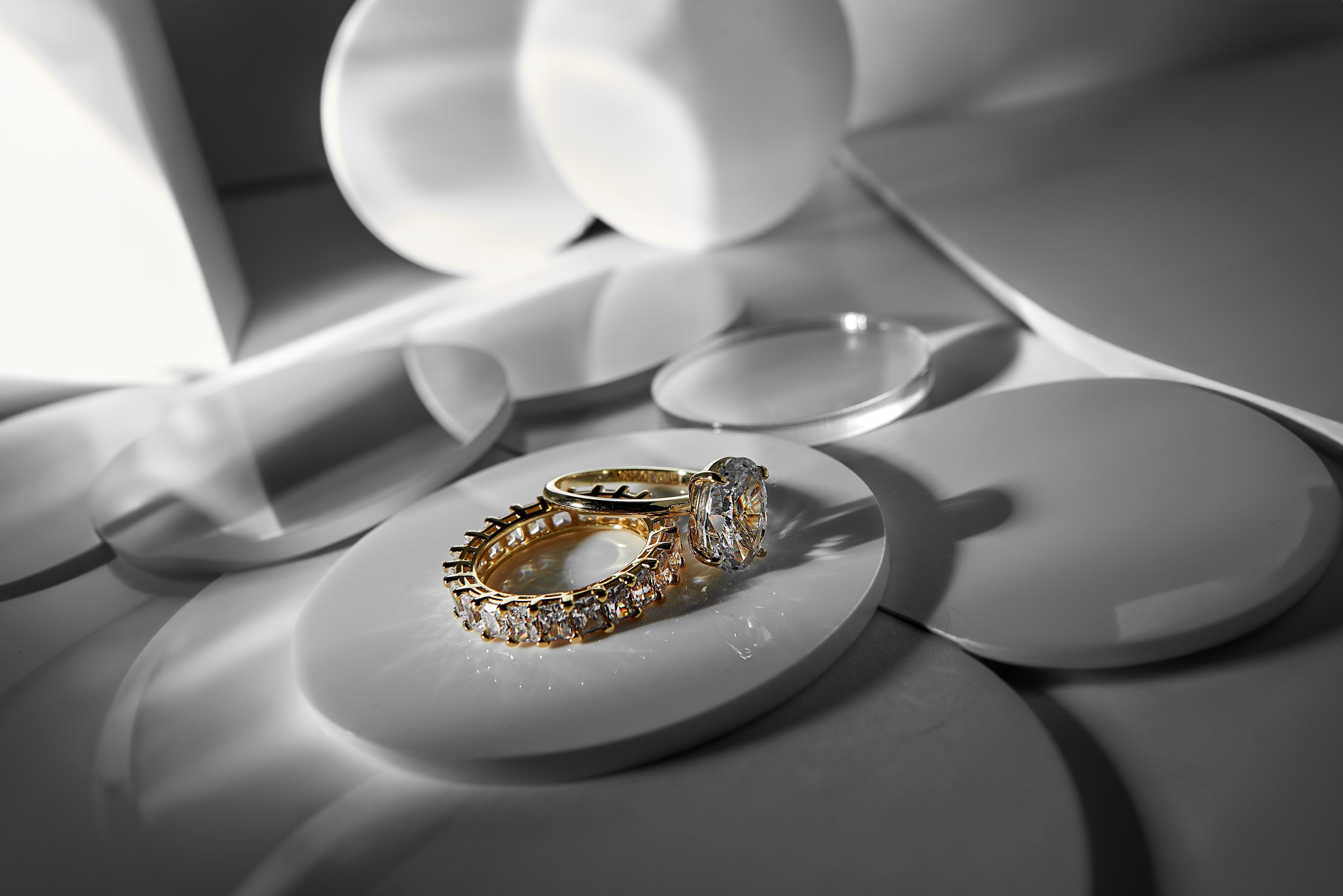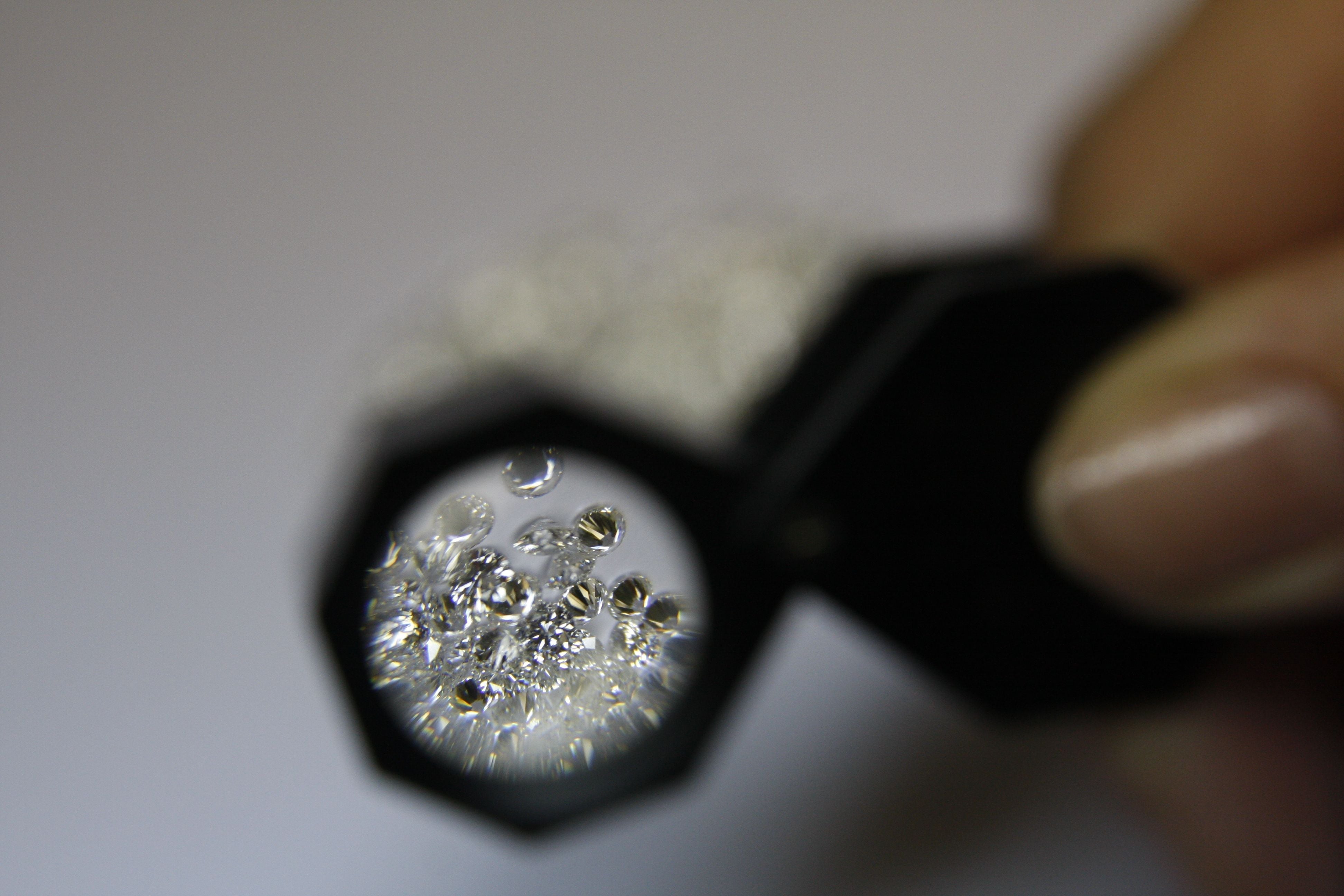
Lab grown diamonds are one of the most significant shifts in fine jewelry in decades — and also one of the most misunderstood. If you're shopping for an engagement ring and wondering whether a lab grown diamond is a real diamond, whether it looks different, or whether it's worth buying, this guide covers everything you need to know.
The short answer: a lab grown diamond is a real diamond. Not a simulant, not a fake, not a lookalike. The same carbon atoms, the same crystal structure, the same fire and brilliance — grown in a laboratory rather than extracted from the earth.
What Is a Lab Grown Diamond, Exactly?
A lab grown diamond is a diamond that was created in a controlled laboratory environment rather than formed naturally underground over billions of years. The end result is chemically, physically, and optically identical to a mined diamond.
Both types of diamond are made of pure carbon atoms arranged in a crystal lattice structure — the same structure that gives diamond its extraordinary hardness (10 on the Mohs scale, the hardest natural substance on earth) and its famous ability to refract light into brilliant flashes of color.
When you look at a lab grown diamond and a mined diamond side by side, even a trained gemologist cannot tell the difference with the naked eye. The only way to distinguish them is with specialized equipment that detects microscopic differences in trace element composition or growth patterns — differences that have no effect on appearance, durability, or value as jewelry.
The Federal Trade Commission (FTC) officially recognizes lab grown diamonds as real diamonds. The grading laboratories that certify them — including IGI (International Gemological Institute) and GIA (Gemological Institute of America) — grade lab grown diamonds using exactly the same 4 Cs standards as mined diamonds: cut, color, clarity, and carat.
How Are Lab Grown Diamonds Made?
There are two main methods used to grow diamonds in a laboratory. Both recreate the conditions under which natural diamonds form — extreme heat and pressure — but in a controlled environment and in a fraction of the time.
CVD: Chemical Vapor Deposition
CVD is the most widely used method for producing gem-quality lab grown diamonds today. Here's how it works:
- A thin slice of diamond (called a diamond seed) is placed inside a sealed chamber.
- The chamber is filled with carbon-rich gases, typically methane.
- The gases are superheated — often to temperatures exceeding 900°C — using microwave energy or lasers.
- The carbon atoms in the gas break apart and deposit onto the diamond seed, layer by layer, building a new diamond crystal over several weeks.
CVD diamonds tend to have excellent clarity and can be grown in larger sizes, making them well-suited for engagement ring center stones.
HPHT: High Pressure, High Temperature
HPHT is the older of the two methods and more closely mimics the natural conditions under which diamonds form deep in the earth.
- A diamond seed is placed inside a growth cell along with carbon source material and a metal catalyst.
- The cell is subjected to enormous pressure (around 1.5 million pounds per square inch) and temperatures above 1,400°C.
- The carbon melts and crystallizes around the seed, forming a new diamond over a period of days to weeks.
HPHT diamonds often have a slightly different growth pattern visible under magnification, but this has no effect on their appearance or durability.
Both methods produce genuine diamonds. The choice of method affects neither the quality of the finished stone nor its appearance in a ring.
Lab Grown vs. Mined Diamonds: What's Actually Different?
This is the question most buyers really want answered. Here's an honest, side-by-side comparison.
| Property | Lab Grown Diamond | Mined Diamond |
|---|---|---|
| Chemical composition | Pure carbon (C) | Pure carbon (C) |
| Crystal structure | Cubic (diamond lattice) | Cubic (diamond lattice) |
| Hardness | 10 (Mohs scale) | 10 (Mohs scale) |
| Refractive index | 2.42 | 2.42 |
| Brilliance & fire | Identical | Identical |
| Graded by 4 Cs | Yes (IGI, GIA) | Yes (IGI, GIA) |
| Visible difference | None to naked eye | None to naked eye |
| Price | 50%–70% less | Higher |
| Environmental impact | Lower (no mining) | Significant land disruption |
| Resale value | Lower (declining) | Low (also declining) |
| Certified as "real diamond" | Yes (FTC recognized) | Yes |
The meaningful differences come down to two things: price and origin. Lab grown diamonds cost dramatically less, and they were created in a laboratory rather than mined from the earth. Everything else — how they look, how they perform, how they're graded — is the same.
Are Lab Grown Diamonds Real Diamonds?
Yes. This is the most common misconception, and it's worth being direct about it.
A lab grown diamond is not a cubic zirconia. It is not a moissanite. It is not a diamond simulant of any kind. Those are different materials with different chemical compositions that are designed to look like diamonds but are not diamonds.
A lab grown diamond is a diamond — the same material, grown by a different process. The analogy often used is ice: ice from a glacier and ice from your freezer are both ice. The origin is different; the substance is the same.
The FTC updated its guidelines in 2018 to formally recognize this, removing the word "natural" from its definition of "diamond" and acknowledging that lab grown diamonds meet the full definition.
What Is IGI Certification for Lab Grown Diamonds?
When you buy a lab grown diamond engagement ring from Anjays Designs, it comes with an IGI (International Gemological Institute) certificate. This is one of the most important things to look for when buying any diamond — lab grown or mined.
An IGI certificate documents:
- Cut grade: How well the diamond was cut to maximize light performance (Excellent, Very Good, Good, Fair, Poor)
- Color grade: The degree of colorlessness, graded D through Z
- Clarity grade: The presence and nature of any internal inclusions or surface blemishes
- Carat weight: The precise weight of the stone
- Shape and measurements: The exact dimensions of the diamond
- Origin: Identified as laboratory grown
The certificate gives you an independent, third-party verification of exactly what you're buying. It's the diamond equivalent of a vehicle history report — it tells you what you're getting, verified by someone with no financial interest in the sale.
Every lab grown diamond engagement ring at Anjays Designs includes an IGI certificate. You should be cautious about any jeweler selling uncertified diamonds, whether lab grown or mined.
Browse our IGI-certified lab grown diamond rings →
Do Lab Grown Diamonds Look Different?
No — not to the naked eye, and not in a photograph, and not on a hand. A lab grown diamond of excellent cut quality looks exactly as brilliant and beautiful as a mined diamond of the same grades.
Under 10x magnification, a trained gemologist might notice different types of inclusions or growth patterns that indicate laboratory origin versus natural origin. But those differences are invisible at normal viewing distances and have no effect on the visual beauty of the stone.
In practice, the most common experience buyers have when they receive their lab grown diamond ring is surprise at how beautiful it looks — often more so than they expected, because their budget allowed for a larger or higher-quality stone than they could have afforded with a mined diamond.
Do Lab Grown Diamonds Hold Their Value?
This is an area where honesty matters. Lab grown diamond prices have declined significantly over the past several years as production technology has improved and supply has increased. This means the resale value of a lab grown diamond purchased today is lower than it was a few years ago, and may continue to decline.
However, it's important to put this in context: mined diamonds also have relatively poor resale value. Most people who sell a diamond ring receive far less than they paid — often 20%–50% of retail value, regardless of whether the stone was lab grown or mined.
The honest framing is this: neither type of diamond is a financial investment in the traditional sense. You're buying a piece of jewelry with deep personal meaning — not a stock or a commodity. When evaluated that way, the lower price of lab grown diamonds means you're spending less on something that holds similar sentimental value and provides the same visual beauty.
Many couples find that freeing. Instead of spending $8,000 on a 1ct mined diamond, they spend $3,000 on a 2ct lab grown diamond and put the $5,000 difference toward a home, a honeymoon, or their future together.
Are Lab Grown Diamonds Ethical and Environmentally Better?
This is a genuinely complex question, and the answer is: generally yes, with some nuance.
Diamond mining has a documented history of environmental disruption — large-scale land excavation, significant water use, and ecosystem impact. The industry has improved its practices significantly over the past two decades, and certifications like the Kimberley Process exist to prevent conflict diamonds from entering the supply chain. But mining remains an extractive industry with a real environmental footprint.
Lab grown diamonds eliminate the need for mining entirely. They require energy to produce — significant energy, in fact — and the environmental impact depends substantially on whether that energy comes from renewable sources. Some lab grown diamond producers are committed to renewable energy; others are not.
What's clear is that lab grown diamonds have no land disruption, no community displacement, and no risk of entering a conflict supply chain. For buyers who prioritize ethical sourcing, lab grown diamonds offer a verifiable, transparent origin story that's difficult to match with mined stones.
At Anjays Designs, we specialize in lab grown diamonds because we believe in offering jewelry that's beautiful, honestly priced, and responsibly made.
What Types of Lab Grown Diamond Jewelry Can You Buy?
Lab grown diamonds are available in every cut, shape, and size used in fine jewelry. At Anjays Designs, we offer lab grown diamonds in:
- Engagement rings: Solitaires, nature-inspired settings, Celtic designs, halo settings, and more — all in solid 14K or 18K gold
- Wedding bands: Diamond bands, eternity bands, and stackable styles
- Diamond earrings: Studs, hoops, and drop styles
- Diamond pendants: Solitaire pendants, custom designs, and gift pieces
All of our lab grown diamonds are handset in solid gold — never gold-plated, never gold-filled. Every piece is made to last a lifetime.
Frequently Asked Questions About Lab Grown Diamonds
Are lab grown diamonds the same as cubic zirconia?
No. Cubic zirconia (CZ) is a completely different material — it's made of zirconium dioxide and is a diamond simulant, meaning it's designed to look like a diamond but is not one. Lab grown diamonds are real diamonds, made of carbon with the same crystal structure and physical properties as mined diamonds. CZ is significantly softer, has a different refractive index, and looks visibly different under close inspection. The two are not comparable.
Can a jeweler tell if my diamond is lab grown?
Not with the naked eye. Even experienced gemologists cannot visually distinguish a lab grown diamond from a mined diamond without specialized equipment. Some jewelers have screening devices that can identify potential lab grown stones, but these require the stone to be removed from its setting and examined closely. In everyday life, no one will know unless you tell them.
Do lab grown diamonds scratch or chip?
Lab grown diamonds have the same hardness as mined diamonds — 10 on the Mohs scale, making them the hardest natural material on earth. They are extremely resistant to scratching. However, diamonds can chip if struck sharply against a hard surface at the right angle, particularly at sharp facet edges or if the prongs holding the stone are loose. The same care that applies to any diamond ring applies to lab grown diamonds.
What diamond shapes are available in lab grown?
All of them. Round brilliant, oval, princess, cushion, emerald, pear, marquise, radiant, and more. Lab grown diamonds are cut into every shape available in mined diamonds, using the same cutting techniques.
How long does it take to grow a lab diamond?
Depending on the method and the size of the stone, between two weeks and several months. A typical 1ct CVD diamond takes approximately four to six weeks to grow. Compare this to the billions of years required for natural diamond formation — the technology is remarkable.
Will my lab grown diamond come with a certificate?
Every lab grown diamond at Anjays Designs comes with an IGI certificate documenting its cut, color, clarity, carat weight, and laboratory origin. Never buy a diamond — lab grown or mined — without a certificate from an independent grading laboratory.
Ready to Find Your Lab Grown Diamond Ring?
Lab grown diamonds offer something that was simply not possible a generation ago: a genuine diamond — brilliant, durable, and beautiful — at a price that lets you get exactly the ring you've dreamed of without compromising on quality or stretching beyond your budget.
At Anjays Designs, every ring is handmade in solid 14K or 18K gold, set with IGI-certified lab grown diamonds, and designed to be worn and loved for a lifetime. We specialize in nature-inspired and Celtic designs alongside timeless solitaires — pieces with character, not just sparkle.
Start exploring:
Questions about lab grown diamonds? Contact us — we love talking about this stuff and we're happy to help you find the perfect stone.